How Many Sets Per Muscle Group Per Week? (Science-Based Guide)

Co-Founder of Cora (YC W24). AI and robotics researcher with 500+ citations from Google Brain and UC Berkeley.
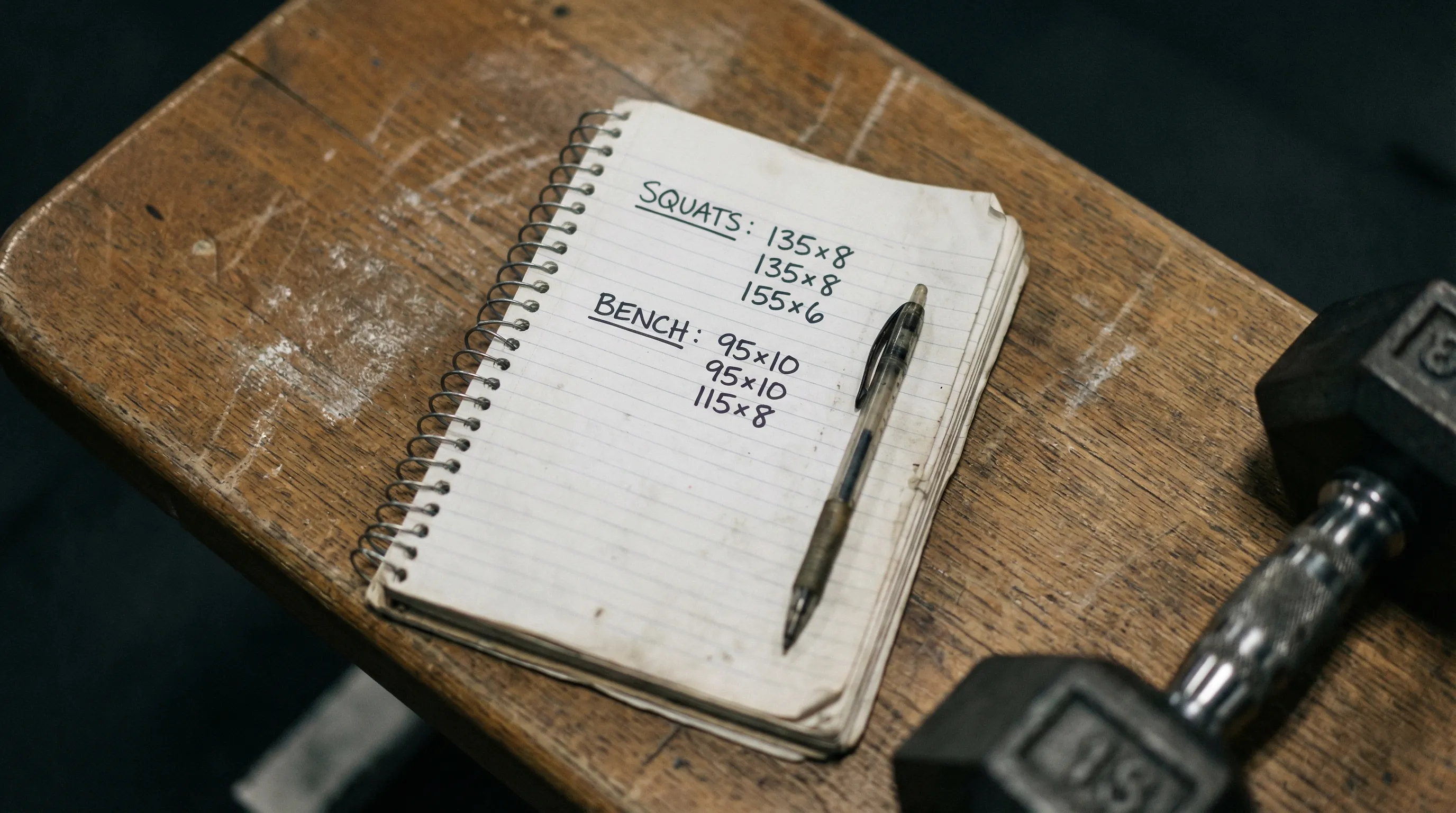
Most people benefit from 10 to 20 sets per muscle group per week for hypertrophy, though the right number depends on training experience. Beginners grow on 6 to 10 sets, intermediates on 10 to 16, and advanced lifters may need 16 to 20 or more. Schoenfeld's 2017 meta-analysis confirmed a dose-response relationship between weekly volume and muscle growth, but returns diminish past your personal recovery ceiling. The practical goal is finding the minimum volume that keeps you progressing, then increasing only when adaptation stalls.
Weekly training volume, measured as the number of hard sets per muscle group per week, is the single most controllable driver of muscle growth. You can argue about rep ranges, exercise selection, and rest periods, but the research is clear: how many sets you perform for a muscle group each week has the largest impact on whether that muscle grows.
This guide covers what the science says about optimal weekly volume, how to set targets based on your experience level, how different training splits distribute volume, and how to tell when you are doing too much or too little. If you are new to structured training, start with our beginner workout plan guide first.
What does weekly training volume actually mean?
Training volume has several definitions in exercise science. Total volume load (sets x reps x weight) matters for strength. But for hypertrophy, the metric that best predicts growth is the number of challenging sets taken close to failure for a given muscle group per week. A "set" in this context means a working set at a meaningful intensity, typically within 3 reps of failure (RPE 7 or higher). Warm-up sets and sets stopped well short of failure do not count toward productive volume.
When someone says "I do 15 sets per week for back," they mean 15 working sets where the back is a primary mover, including both compound movements like rows and pull-ups and isolation movements like straight-arm pulldowns. This is the definition used throughout this article and in the research cited below.
What does the research say about sets and muscle growth?
The landmark study on this topic is Schoenfeld et al. (2017), a meta-analysis published in the Journal of Sports Sciences that examined the dose-response relationship between weekly set volume and hypertrophy. The findings were straightforward: higher weekly set volumes produced greater muscle growth, with a clear advantage for 10 or more sets per week over fewer than 5. Krieger's (2010) earlier meta-analysis reached a similar conclusion, finding that multiple sets per exercise produced 40% greater hypertrophy than single sets.
However, more is not always better. Israetel and colleagues have documented the concept of Maximum Recoverable Volume (MRV), the highest volume from which you can still recover and adapt. Training beyond your MRV does not just plateau your gains; it can actively reduce them by creating more muscle damage than your body can repair between sessions. This creates a practical ceiling that varies by individual, muscle group, training age, sleep quality, nutrition, and stress levels.
The current evidence points to a volume sweet spot: enough sets to maximize the hypertrophy stimulus, but not so many that recovery becomes the bottleneck. For most people, that range falls between 10 and 20 sets per muscle group per week, with the exact number depending on experience level.
How many sets per muscle group should you do per week?
The following table provides evidence-based recommendations by experience level. These ranges account for the dose-response curve documented in Schoenfeld (2017) and the recovery constraints described by Israetel. Use the lower end of each range as a starting point and increase only when progress stalls.
| Muscle Group | Beginner (0-1 yr) | Intermediate (1-3 yr) | Advanced (3+ yr) |
|---|---|---|---|
| Chest | 6-8 | 10-14 | 14-20 |
| Back | 6-8 | 10-16 | 16-22 |
| Shoulders | 6-8 | 10-14 | 14-20 |
| Quads | 6-8 | 10-14 | 14-20 |
| Hamstrings | 4-6 | 8-12 | 12-16 |
| Biceps | 4-6 | 8-12 | 12-18 |
| Triceps | 4-6 | 8-12 | 12-18 |
| Calves | 4-6 | 8-12 | 12-16 |
| Abs | 0-4 | 6-10 | 10-14 |
A few notes on this table. Back can typically handle higher volumes than other muscle groups because it is a large, complex area with multiple muscles (lats, traps, rhomboids, rear delts, erectors) that respond well to varied pulling angles. Abs often need less direct work than people think because they receive indirect stimulus from compound lifts like squats, deadlifts, and overhead presses. Hamstrings get partial volume from hip-hinge compounds, so their direct set counts can be lower.
What is the minimum effective dose for muscle growth?
The Minimum Effective Volume (MEV) is the lowest number of sets per week that still produces measurable hypertrophy. For most muscle groups, research suggests this is somewhere around 4 to 6 sets per week for trained individuals. For beginners, it can be as low as 2 to 4 sets because untrained muscle responds to virtually any stimulus.
MEV matters for two practical reasons. First, during periods of high life stress, travel, or injury recovery, training at MEV allows you to maintain muscle with minimal time and fatigue. Second, if you train many muscle groups, you may need to prioritize certain muscles at higher volumes while keeping others at maintenance levels. Understanding your MEV for each muscle group lets you make these tradeoffs intelligently. For more on managing training load, see our guide to training load tracking.
Want Cora to help with this?
Try Cora Free Text CoraHow do training splits affect volume distribution?
Your training split determines how you distribute weekly volume across sessions. The split itself does not change how much total volume you need. It changes how that volume is organized. Here are the three most common approaches and how they handle volume distribution:
Push-Pull-Legs (PPL), 6 days per week: Each muscle group is hit twice per week across two rotations. A typical PPL split allocates 5 to 7 sets per session per major muscle group, landing at 10 to 14 sets per week. This is efficient for intermediates who want high frequency without excessively long sessions. The high frequency also means each session's volume per muscle is moderate, which supports better performance and recovery within the session.
Upper-Lower, 4 days per week: Each muscle group is trained twice per week. Upper days cover chest, back, shoulders, biceps, and triceps. Lower days cover quads, hamstrings, glutes, calves, and abs. Because you are fitting more muscle groups into each session, individual muscle volumes per session tend to be 5 to 8 sets, keeping weekly totals in the 10 to 16 range. This works well for intermediates who want four structured training days with three recovery days. Check our best workout split for beginners guide for more on choosing a split.
Full-Body, 3 days per week: Every muscle group is trained three times per week, but with lower per-session volume (2 to 4 sets per muscle group per session). Weekly totals land at 6 to 12 sets. This is ideal for beginners who benefit from frequent practice of movement patterns and can recover quickly from moderate-volume sessions. It is also effective for advanced lifters during maintenance or deload phases.
The research is clear that frequency itself is less important than total weekly volume, as long as volume is equated. Whether you do 12 sets of chest across two sessions or three sessions makes little difference to hypertrophy outcomes. Choose the split that fits your schedule and allows you to perform each set with high quality. Not sure which split fits you? Try the Cora workout quiz for a personalized recommendation.
How does recovery limit your weekly volume?
Volume is only productive if you can recover from it. This is the core insight behind Israetel's Maximum Recoverable Volume (MRV) framework. Your MRV is the highest volume you can perform while still recovering and adapting between sessions. Exceed it, and you accumulate fatigue faster than you can dissipate it, leading to stagnation or regression.
Several factors determine your personal MRV:
- Sleep: Poor sleep directly reduces recovery capacity. Someone sleeping 6 hours a night has a meaningfully lower MRV than the same person sleeping 8 hours.
- Nutrition: Adequate protein (1.6 to 2.2 g/kg body weight) and sufficient calories are prerequisites for recovering from high-volume training. A caloric deficit lowers your MRV.
- Stress: Work, relationships, and life stress compete for the same recovery resources as training. High life stress means lower training tolerance.
- Training age: More experienced lifters can generally tolerate and recover from higher volumes because their bodies have adapted to training stimulus over years.
- Age: Recovery capacity tends to decrease with age, though consistent training and good habits can offset much of this.
The practical implication is that your optimal volume is not a fixed number. It shifts based on your current life circumstances. During a well-rested, low-stress training block with good nutrition, you might thrive on 16 sets per week for quads. During a stressful work period with disrupted sleep, 10 sets might be your ceiling. Recognizing this flexibility is more important than hitting a specific number. Learn to spot the signs of overtraining so you can adjust before performance drops.
How should you increase volume over time?
Volume should increase gradually as part of progressive overload. The standard approach is to add 1 to 2 sets per muscle group per week across a mesocycle (typically 4 to 6 weeks), then deload back to lower volumes before starting the next progression. This is sometimes called volume periodization or the MEV-to-MRV ramp.
A practical example for an intermediate lifter training chest:
- Week 1: 10 sets (starting near MEV)
- Week 2: 12 sets
- Week 3: 14 sets
- Week 4: 16 sets (approaching MRV)
- Week 5: 6 sets (deload)
This ramp-and-deload structure lets you push volume progressively while building in recovery. The deload week is not wasted; it allows accumulated fatigue to dissipate so your body can realize the adaptations stimulated during the higher-volume weeks. Skipping deloads is one of the most common reasons intermediate lifters plateau. Scheduling proper rest days and deload weeks is essential for long-term progress.
How do you know if your volume is wrong?
There are clear signals that your weekly volume needs adjustment in either direction:
Signs you need more volume:
- You are recovering fully between sessions but not getting stronger or adding reps
- Muscles do not feel adequately stimulated after training (minimal pump, no delayed soreness)
- You have been at the same set count for months with no progress
- You feel fresh by the next session for that muscle group with energy to spare
Signs you need less volume:
Want Cora to help with this?
Try Cora Free Text Cora- Persistent joint pain or nagging injuries
- Performance declining (weights going down, reps decreasing)
- Chronic fatigue that does not resolve with a good night of sleep
- Motivation dropping significantly despite adequate sleep and nutrition
- Excessive soreness lasting more than 48 to 72 hours
Tracking your sets, weights, and reps each session makes these signals visible. Without data, you are guessing. With it, patterns emerge quickly. Our guide on training load tracking covers how to monitor these metrics effectively.
Practical weekly volume examples by split
Here is what evidence-based volume prescriptions look like in practice for an intermediate lifter targeting 12 to 16 sets per major muscle group per week:
PPL (6 days): Push A: 4 sets chest, 3 sets shoulders, 3 sets triceps. Pull A: 5 sets back, 3 sets biceps. Legs A: 4 sets quads, 3 sets hamstrings, 2 sets calves. Repeat with Push B, Pull B, Legs B using different exercises. Weekly totals: Chest 8, Shoulders 6 direct + compound overlap, Back 10, Quads 8, Hamstrings 6, Biceps 6, Triceps 6. Add isolation sets to bring lagging groups into the 12 to 16 range.
Upper-Lower (4 days): Upper A: 4 sets chest, 4 sets back, 2 sets shoulders, 2 sets biceps, 2 sets triceps. Lower A: 4 sets quads, 3 sets hamstrings, 2 sets calves, 2 sets abs. Repeat for Upper B and Lower B. Weekly totals: Chest 8, Back 8, Shoulders 4 direct, Quads 8, Hamstrings 6. Supplement with isolation work or a fifth day to reach higher targets.
Full-Body (3 days): Each session: 2 sets chest (compound), 2 sets back (compound), 2 sets quads (compound), 1 set hamstrings, 1 set shoulders, 1 set arms. Weekly totals: 6 sets per major group. Ideal for beginners or maintenance phases.
Key Takeaways
- Weekly set volume per muscle group is the strongest controllable predictor of hypertrophy. Aim for 10 to 20 sets per muscle group per week for most trained individuals.
- Beginners grow on 6 to 10 sets. Intermediate and advanced lifters need progressively more to keep adapting, but returns diminish past your Maximum Recoverable Volume.
- Compound exercises count toward volume for all muscles they work. A bench press is a chest set, a shoulder set, and a triceps set.
- Your split (PPL, Upper-Lower, Full-Body) organizes volume across the week. Total weekly volume matters more than how you distribute it across sessions.
- Recovery capacity sets your volume ceiling. Sleep, nutrition, stress, and training age all influence how much volume you can productively handle.
- Increase volume gradually (1 to 2 sets per week per mesocycle), then deload. Track performance to know when to add more or pull back.
Cora automatically tracks your weekly volume per muscle group and adjusts your plan based on recovery. It counts sets from logged workouts, maps compound exercises to the muscles they train, and flags when a muscle group is under or over your target range. Download Cora to take the guesswork out of volume management.
Frequently Asked Questions
How many sets per muscle group per week is optimal for growth?
Research suggests 10 to 20 sets per muscle group per week is optimal for most trained individuals. Schoenfeld's 2017 meta-analysis found a dose-response relationship where higher volumes produced greater hypertrophy up to a point. Beginners can grow on as few as 6 to 8 sets per week, while advanced lifters may need 15 to 20 or more. The key is finding the volume that produces progress without exceeding your ability to recover between sessions.
Is 20 sets per muscle group per week too much?
It depends on your training experience, recovery capacity, and the muscle group in question. For most intermediate lifters, 20 sets per week for a single muscle group is near the upper limit of productive volume. Going beyond that point often leads to diminishing returns or accumulated fatigue that impairs recovery. Israetel's concept of Maximum Recoverable Volume suggests that exceeding your personal ceiling actually reduces gains. Start lower and increase only when progress stalls.
Do compound exercises count toward sets for multiple muscle groups?
Yes. A bench press counts as a set for chest, front delts, and triceps. A barbell row counts for back and biceps. A squat counts for quads, glutes, and to a lesser degree hamstrings. When counting weekly volume, include both compound and isolation sets for each muscle group. Most well-designed programs get the majority of their volume from compound movements, with isolation work filling gaps for muscles that need additional direct stimulus.
Should beginners train the same volume as advanced lifters?
No. Beginners respond to much lower training volumes because their muscles are not yet adapted to resistance training. Six to ten sets per muscle group per week is typically enough for a beginner to make consistent progress. Starting with excessive volume increases soreness, fatigue, and injury risk without proportionally better results. As your body adapts over months and years of training, you gradually increase volume to continue driving progress.
How do I know if I am doing enough sets per week?
Track two things: performance and recovery. If you are getting stronger or adding reps over time and recovering well between sessions, your volume is likely sufficient. If progress has stalled despite good sleep, nutrition, and consistency, you may need more volume. If you feel chronically fatigued, joints ache, or performance is declining, you may be doing too much. Apps like Cora track your weekly volume per muscle group automatically and flag when adjustments are needed.
Track your workouts with Cora
Cora creates AI-powered workout plans that adapt to your recovery, tracks your progress across every metric, and coaches you in real time.