The Complete Beginner Workout Plan: Your First 8 Weeks

Co-Founder of Cora (YC W24). AI and robotics researcher with 500+ citations from Google Brain and UC Berkeley.
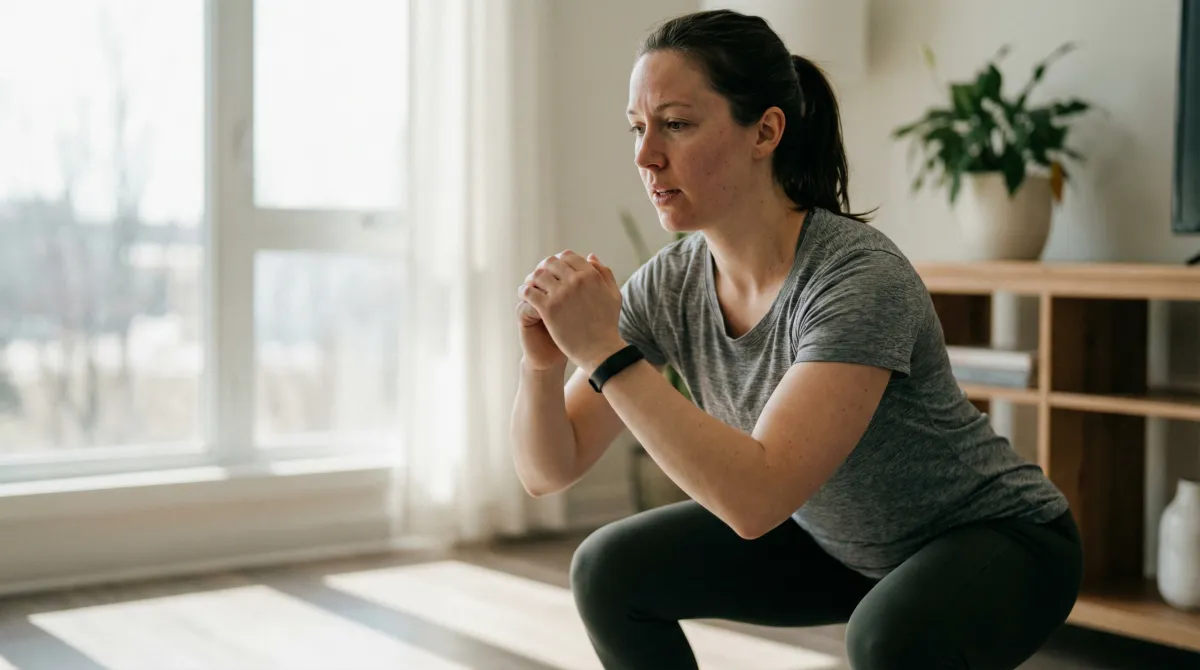
A beginner workout plan should start with 3 days per week of full-body sessions combining bodyweight strength exercises, light cardio, and flexibility work. Over 8 weeks, you progressively add volume, intensity, and exercise variety so your body adapts without burnout or injury. The key is consistency: showing up 3 times a week matters far more than any single hard session.
Starting a workout routine is one of the best decisions you can make for your health, but it can also feel overwhelming. How many days should you train? What exercises should you do? How hard should you push? This 8-week beginner workout plan answers all of those questions with a clear, progressive structure designed for people who are brand new to exercise or returning after a long break.
The program uses a simple 3-day-per-week schedule built around full-body sessions. Each phase gradually increases the challenge so you build strength, cardiovascular fitness, and healthy habits without overdoing it. If you are not sure where you stand physically, take our fitness level assessment or the workout quiz before you begin.
Who is this beginner workout plan for?
This plan is designed for adults who meet one or more of the following criteria:
- You have never followed a structured exercise program before.
- You have been sedentary for 3 months or longer and want to restart safely.
- You exercise sporadically but want a consistent weekly routine.
- You have been cleared by a doctor to begin moderate physical activity.
If you already train 3 or more days per week and can comfortably perform push-ups, squats, and 20 minutes of continuous cardio, you are likely past the beginner stage. In that case, explore our training features for intermediate and adaptive programming.
What equipment do you need?
Very little. The first 4 weeks are entirely bodyweight. For Weeks 5 through 8, a pair of light dumbbells (5 to 15 pounds depending on your strength) or resistance bands will add the progression your muscles need. Here is the full list:
- Required: Comfortable shoes, a mat or soft surface, water bottle.
- Weeks 5-8: A pair of dumbbells (5 to 15 lb) or a resistance band set.
- Optional but helpful: A heart rate monitor or wearable to track heart rate zones during cardio.
The 8-week beginner workout plan
The plan is divided into four 2-week phases. Each phase builds on the last by adding sets, reps, exercises, or cardio duration. Train on 3 non-consecutive days per week (for example, Monday, Wednesday, Friday). Rest days are just as important as training days because your muscles grow and adapt during recovery. Use the recovery calculator to check your readiness before each session.
Weeks 1-2: Build the habit
The goal here is simply to show up 3 times per week and learn the movement patterns. Keep the effort moderate. You should finish each session feeling like you could have done a bit more.
| Day | Exercise | Sets x Reps |
|---|---|---|
| Mon / Wed / Fri | Bodyweight Squats | 2 x 10 |
| Incline Push-ups (hands on bench or wall) | 2 x 8 | |
| Glute Bridges | 2 x 12 | |
| Dead Hang or Plank Hold | 2 x 15-20 sec | |
| Walking (brisk pace) | 10 min |
Rest between sets: 60 to 90 seconds. Total session time: approximately 25 to 30 minutes.
Weeks 3-4: Add volume
You now increase sets from 2 to 3 and add one new exercise per session. Cardio duration extends to 15 minutes. These small jumps are enough to drive adaptation without overwhelming your joints.
| Day | Exercise | Sets x Reps |
|---|---|---|
| Mon / Wed / Fri | Bodyweight Squats | 3 x 12 |
| Incline Push-ups (lower angle) or Knee Push-ups | 3 x 10 | |
| Glute Bridges | 3 x 12 | |
| Plank Hold | 3 x 20-30 sec | |
| Reverse Lunges (alternating) | 2 x 8 each leg | |
| Brisk Walking or Easy Cycling | 15 min |
Rest between sets: 60 to 90 seconds. Total session time: approximately 30 to 40 minutes.
Weeks 5-6: Introduce resistance
This is where dumbbells or resistance bands enter the picture. Adding external load is the next progression step and forces your muscles to recruit more fibers. Keep the weights light enough that you can complete every rep with good form.
Want Cora to help with this?
Try Cora Free Text Cora| Day | Exercise | Sets x Reps |
|---|---|---|
| Mon / Wed / Fri | Goblet Squats (dumbbell) | 3 x 10 |
| Push-ups (full or knee) | 3 x 8-12 | |
| Dumbbell Romanian Deadlifts | 3 x 10 | |
| Dumbbell Rows (each arm) | 3 x 10 | |
| Reverse Lunges (dumbbell) | 3 x 8 each leg | |
| Plank Hold | 3 x 30 sec | |
| Cardio (walk, cycle, or light jog) | 15-20 min |
Rest between sets: 60 to 90 seconds. Total session time: approximately 40 to 45 minutes.
Weeks 7-8: Build intensity
In the final phase, you increase reps, add a fourth training day (optional), and introduce short cardio intervals. This prepares you for more advanced programming after the 8 weeks are over.
| Day | Exercise | Sets x Reps |
|---|---|---|
| Mon / Wed / Fri | Goblet Squats | 3 x 12 |
| Push-ups (full) | 3 x 10-15 | |
| Dumbbell Romanian Deadlifts | 3 x 12 | |
| Dumbbell Rows (each arm) | 3 x 12 | |
| Dumbbell Reverse Lunges | 3 x 10 each leg | |
| Plank Hold | 3 x 30-45 sec | |
| Cardio intervals: 1 min brisk / 1 min easy | 20 min total |
| Day | Exercise | Sets x Reps |
|---|---|---|
| Sat (optional 4th day) | Easy Zone 2 cardio (walk, cycle, swim) | 25-30 min |
| Stretching / mobility routine | 10 min |
Rest between sets: 60 to 90 seconds. Total session time: approximately 45 to 50 minutes.
How to warm up and cool down properly
Skipping the warm-up is the most common beginner mistake. A good warm-up raises your heart rate gradually, lubricates joints, and primes your nervous system for effort. A cool-down brings your heart rate back to baseline and starts the recovery process.
5-minute warm-up (before every session)
- March in place or light jog for 60 seconds.
- Arm circles: 10 forward, 10 backward.
- Leg swings: 10 each leg, front to back.
- Bodyweight squats (slow): 8 reps.
- Inchworms: 5 reps.
5-minute cool-down (after every session)
- Walk at an easy pace for 2 minutes.
- Standing quad stretch: 30 seconds each leg.
- Standing hamstring stretch: 30 seconds each leg.
- Chest doorway stretch: 30 seconds.
- Child's pose: 30 to 60 seconds.
For a deeper look at recovery practices, read our guide on recovery-based training.
How to track your progress
Tracking progress keeps you motivated and tells you when it is time to make the program harder. Here is what to record after each workout:
Want Cora to help with this?
Try Cora Free Text Cora- Exercises, sets, and reps completed. Write down the actual numbers, not just the target.
- Weights used (once you add dumbbells in Weeks 5-8).
- How the session felt on a 1 to 10 scale. If you consistently rate sessions below 5, you are ready to progress.
- Cardio duration and effort. Tracking your heart rate zones during cardio helps you keep easy days easy and push days productive.
- Body measurements (optional). If body composition is a goal, use our body fat calculator and check in every 2 to 4 weeks rather than daily.
Consistency is the strongest predictor of results. Our guide on workout consistency breaks down the habits that separate people who stick with training from those who quit after a month.
What to do after the 8 weeks
Congratulations -- you have built a solid foundation. Here is how to keep progressing:
- Increase training frequency. Move from 3 to 4 days per week, or add a dedicated cardio day.
- Split your sessions. Instead of full-body every day, try an upper/lower split to handle more volume per muscle group.
- Add heavier weights. Aim to increase dumbbell loads by 2 to 5 pounds every 1 to 2 weeks when you can complete all reps with good form.
- Set a VO2 max baseline. Use our VO2 max calculator to benchmark your cardio fitness and set a target for the next training block.
- Dial in nutrition. As training demand grows, so do fuel requirements. Our macro calculator can help you set protein, carb, and fat targets based on your activity level and goals.
- Use adaptive coaching. Cora's AI coaching adjusts your plan based on recovery data, so you always train at the right intensity. Download the app to get started.
Key Takeaways
- Start with 3 full-body sessions per week. Consistency beats intensity for beginners.
- Progress gradually: add sets and reps in Weeks 3-4, external resistance in Weeks 5-6, and intensity in Weeks 7-8.
- Always warm up for 5 minutes before training and cool down for 5 minutes after.
- Track your workouts, rate of perceived effort, and body measurements to know when to advance.
- After 8 weeks, increase frequency, add weight, or move to an upper/lower split to keep adapting.
- Use recovery data, not just motivation, to decide training intensity each day.
Frequently Asked Questions
How many days a week should a beginner work out?
Three days per week is the ideal starting point for most beginners. This gives you a training stimulus on non-consecutive days while leaving plenty of recovery time. As you adapt over the 8-week program, you can add a fourth day for light cardio or mobility work. The most important factor is showing up consistently rather than cramming too many sessions into the week and burning out.
Can I do this workout plan at home with no equipment?
Yes. Weeks 1 through 4 are entirely bodyweight and require no equipment beyond a mat or soft surface. For Weeks 5 through 8, you can substitute resistance bands for dumbbells, or use household items like water jugs or a loaded backpack for added resistance. The exercises are designed around fundamental movement patterns that work with or without a gym.
How long should each workout take?
In Weeks 1 and 2, sessions take about 25 to 30 minutes including warm-up and cool-down. By Weeks 7 and 8, sessions extend to 45 to 50 minutes as you add more exercises and cardio. Keeping workouts under an hour makes them easier to schedule and sustain over the long term, which is the single biggest factor in getting results.
What if I miss a workout day?
Simply do it the next available day and continue the schedule from there. Do not try to double up by combining two sessions into one. Missing an occasional day has almost no impact on your progress. What matters is the overall trend: if you complete 10 out of 12 sessions in a month, you are doing great. If you miss more than that, look at scheduling barriers rather than willpower.
Should I do cardio or strength training first?
In this beginner plan, do the strength exercises first and finish with cardio. Strength exercises require more coordination and neuromuscular control, so performing them when you are fresh reduces injury risk and improves form. The cardio portion at the end serves as a cool-down that also builds your aerobic base. As you become more experienced, you can experiment with separate cardio sessions on off-days.
Track your workouts with Cora
Cora creates AI-powered workout plans that adapt to your recovery, tracks your progress across every metric, and coaches you in real time.