How Sleep Affects Your Workout Performance and Recovery

Co-Founder of Cora (YC W24). AI and robotics researcher with 500+ citations from Google Brain and UC Berkeley.
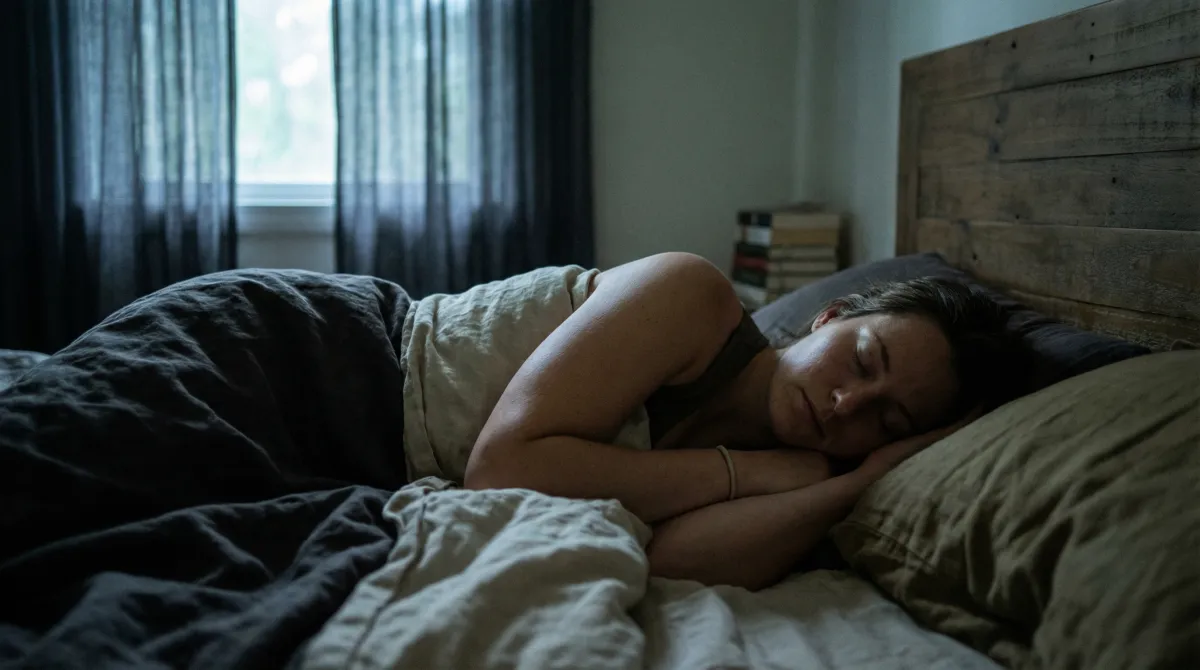
Sleep is the single most important recovery tool for anyone who exercises. During deep sleep your body releases growth hormone, repairs muscle tissue, and restores the nervous system. Consistently getting 7 to 9 hours of quality sleep improves strength, endurance, reaction time, and injury resilience, while even modest sleep loss can reduce workout performance by 10 to 30 percent.
You can dial in your training program, nail your nutrition, and stay perfectly consistent, but if your sleep is poor, you are leaving significant results on the table. Sleep is when the adaptations from exercise actually happen. It is not downtime; it is the most productive phase of your recovery cycle. This guide covers the science behind sleep and exercise performance, how much sleep athletes really need, and practical steps to improve both. Matthew Walker, Professor of Neuroscience and Psychology at UC Berkeley and author of Why We Sleep, calls sleep "the greatest performance-enhancing drug that most people are neglecting." The research supports that framing. For a broader view of how sleep connects to HRV, training readiness, and recovery, see the recovery hub.
Why is sleep so important for fitness?
Sleep is when your body shifts into repair mode. During slow-wave deep sleep, the pituitary gland releases up to 75 percent of your daily growth hormone, which drives muscle protein synthesis, tissue repair, and bone remodeling. A 2011 study in the Journal of the American Medical Association found that reducing sleep from 8.5 to 5.5 hours over two weeks caused subjects to lose 55 percent more lean mass during a calorie deficit, even though total weight loss was similar. In other words, poor sleepers lost muscle instead of fat.
Sleep also restores glycogen stores in both the liver and muscles, clears metabolic waste products from the brain, and rebalances hormones like cortisol and testosterone that directly govern training adaptation. Without adequate sleep, your body stays in a catabolic state longer, inflammation stays elevated, and your readiness for the next session drops. You can track how these factors influence your daily training readiness with the recovery calculator.
How does sleep deprivation affect workout performance?
The performance effects of poor sleep are well documented and broader than most people realize. A landmark study from Stanford University's Sleep Disorders Clinic showed that extending sleep to 10 hours per night for collegiate basketball players improved sprint times by 4 percent, free throw accuracy by 9 percent, and three-point accuracy by 9.2 percent. When researchers take sleep away, the opposite happens.
Here is what the research consistently shows about training on insufficient sleep:
- Reduced maximal strength: A study in the European Journal of Applied Physiology found that a single night of partial sleep restriction (roughly 3 to 4 hours) reduced maximal bench press and leg press strength by up to 20 percent.
- Impaired endurance: Research published in the European Journal of Applied Physiology showed that sleep-deprived subjects reached exhaustion 11 percent sooner during submaximal running efforts.
- Slower reaction time: After 24 hours without sleep, reaction time degrades to a level comparable to a blood alcohol concentration of 0.10 percent, according to a study in Occupational and Environmental Medicine.
- Higher perceived exertion: The same workload feels harder. Research in Psychophysiology found that sleep-deprived individuals rated identical exercise intensities as significantly more effortful.
- Increased injury risk: A study of adolescent athletes published in the Journal of Pediatric Orthopaedics found that athletes sleeping fewer than 8 hours per night were 1.7 times more likely to sustain an injury.
If your workouts have felt unusually hard despite no change in programming, poor sleep may be the hidden variable. Check your heart rate recovery and resting heart rate trends. Both tend to worsen with accumulated sleep debt, which is also a common pattern in overtraining.
How much sleep do athletes need?
The general adult recommendation is 7 to 9 hours per night, but exercising individuals typically need the upper end or more. The American Academy of Sleep Medicine and the National Sleep Foundation both recommend 7 to 9 hours for adults, while the consensus statement from the International Olympic Committee specifically recommends 8 to 10 hours for elite athletes.
The key factors that increase sleep need include:
- Training volume: Higher weekly training loads require more repair time.
- Training intensity: Hard interval sessions and heavy lifting create more tissue damage to repair.
- Age: Younger athletes (teens and early 20s) may need 9 to 10 hours due to ongoing development.
- Stress load: Mental and emotional stress compounds physical stress and raises sleep requirements.
Rather than fixating on a single number, pay attention to how you feel and perform. If you consistently wake without an alarm, feel alert within 15 to 30 minutes, and can sustain your training plan without declining performance, your sleep duration is likely sufficient.
How does sleep affect muscle recovery and growth?
Muscle recovery depends heavily on what happens during sleep. During non-REM deep sleep (stages 3 and 4), your body executes the core repair processes:
- Growth hormone release: Up to 75 percent of daily GH secretion occurs during deep sleep, driving muscle protein synthesis and tissue repair.
- Testosterone maintenance: A study in JAMA found that restricting healthy young men to 5 hours of sleep per night for one week reduced testosterone levels by 10 to 15 percent, a decline equivalent to 10 to 15 years of aging.
- Cortisol regulation: Sleep deprivation elevates cortisol, which promotes muscle breakdown and fat storage. Research in The Lancet showed that sleep restriction increased evening cortisol levels by up to 37 percent.
- Inflammation clearance: The glymphatic system, most active during deep sleep, clears inflammatory byproducts from the brain and body.
- Glycogen replenishment: Muscle and liver glycogen stores are restored more efficiently during adequate sleep, preparing you for the next session.
Want Cora to help with this?
Try Cora Free Text CoraFor a broader view of how recovery status connects to training decisions, see our guide to recovery-based training.
What is the link between sleep and HRV?
Heart rate variability (HRV) is one of the best objective markers of recovery, and it is deeply affected by sleep. HRV reflects the balance between your sympathetic (fight-or-flight) and parasympathetic (rest-and-digest) nervous systems. During quality sleep, parasympathetic activity dominates, and HRV tends to be higher. When sleep is disrupted, shortened, or poor quality, sympathetic tone stays elevated and HRV drops.
A study published in Sleep Medicine Reviews confirmed that both short sleep duration and poor sleep quality are consistently associated with lower HRV. This means your morning HRV reading is partly a report card on last night's sleep. If you notice a multi-day HRV decline alongside poor sleep, it is a strong signal to reduce training intensity. Learn more about interpreting this metric in our guide to HRV, and explore how sleep and other factors connect in the Cora recovery features.
How to improve sleep for better training results
Research from sleep science and sports medicine converges on a set of practical strategies. These are not exotic biohacks; they are high-leverage habits that compound over time.
- Keep a consistent schedule: Go to bed and wake up within a 30-minute window every day, including weekends. Regularity strengthens circadian rhythm more than any supplement.
- Protect the 90-minute pre-bed window: Dim lights, avoid screens or use night mode, and stop intense mental work. This allows melatonin to rise naturally.
- Time your training wisely: Morning and midday exercise tend to improve sleep quality. Intense exercise within 2 to 3 hours of bedtime can elevate core temperature and adrenaline, making it harder to fall asleep. If evenings are your only option, favor moderate intensity.
- Control your sleep environment: Keep your room cool (60 to 67 degrees Fahrenheit or 15 to 19 degrees Celsius), dark, and quiet. Even small amounts of light exposure during sleep reduce melatonin and fragment deep sleep stages.
- Manage caffeine timing: Caffeine has a half-life of 5 to 7 hours. A coffee at 2 PM still has half its caffeine in your system at 7 to 9 PM. Set a personal cutoff, typically before noon or early afternoon.
- Use post-training nutrition to support sleep: Adequate carbohydrate intake after hard sessions helps replenish glycogen and supports serotonin production. Tart cherry juice, kiwifruit, and magnesium-rich foods have shown modest sleep-quality improvements in controlled studies.
- Nap strategically: A 20 to 30 minute nap before 2 PM can partially offset sleep debt without disrupting nighttime sleep. Longer or later naps can interfere with sleep drive.
- Track and respond to your data: Use your recovery score and resting heart rate trends to notice when sleep issues are accumulating. If recovery is trending down, prioritize sleep before adding training volume.
Use the heart rate zones calculator to plan session intensity based on readiness, so that on low-sleep days you default to Zone 1 or Zone 2 rather than forcing a hard session that deepens your recovery debt.
What if lifestyle changes are not enough? CBT-I and sleep disorders
The sleep hygiene tips above work well for athletes whose sleep is suboptimal due to habits (late screens, irregular schedule, too much caffeine). But for athletes with chronic insomnia — difficulty falling or staying asleep three or more nights per week for more than three months — Cognitive Behavioral Therapy for Insomnia (CBT-I) is the gold standard treatment and outperforms sleep medication in clinical trials.
CBT-I addresses the thoughts, behaviors, and physiological patterns that perpetuate insomnia through a structured program that typically spans 6 to 8 weeks. The core components include:
Want Cora to help with this?
Try Cora Free Text Cora- Sleep restriction therapy: Temporarily limiting time in bed to match actual sleep time, then gradually extending as sleep efficiency improves. This builds sleep pressure and resets the sleep-wake cycle.
- Stimulus control: Associating bed only with sleep (not screens, work, or worry) to strengthen the psychological cue for sleep onset.
- Cognitive restructuring: Identifying and challenging sleep-related anxiety thoughts (for example, "if I do not sleep 8 hours tonight, tomorrow's workout is ruined") that keep the brain in an alert state at bedtime.
- Relaxation techniques: Progressive muscle relaxation, diaphragmatic breathing, and mindfulness to reduce pre-sleep physiological arousal.
Multiple systematic reviews, including a 2023 Cochrane analysis, confirm that CBT-I reduces time to fall asleep, increases total sleep time, and improves sleep quality, with effects that last significantly longer than medication. Digital CBT-I programs (such as Sleepio or Somryst) are now available for athletes who want guided access without a clinic. If chronic insomnia is affecting your training, this is the evidence-based path to fix it — not melatonin or white noise alone.
Key Takeaways
- Sleep is the primary window for muscle repair, hormone balance, and nervous system recovery. Most training adaptations happen during deep sleep, not during the workout itself.
- Even one night of poor sleep can reduce strength by up to 20 percent and impair endurance, reaction time, and perceived effort.
- Athletes should aim for 8 to 10 hours; general exercisers should target at least 7.5 to 9 hours consistently.
- HRV and resting heart rate are objective sleep quality indicators. Multi-day declines in HRV with rising RHR suggest accumulated sleep debt.
- Consistent sleep timing, a cool dark room, caffeine cutoffs, and strategic napping are the highest-return sleep habits for training performance.
Frequently Asked Questions
Is it better to sleep more or wake up early to work out?
If you are consistently getting fewer than 7 hours of sleep, prioritizing sleep over an early workout is usually the better choice. A well-rested body adapts faster, performs better, and is less injury-prone than one running on a sleep deficit. If you can restructure your schedule to sleep 7.5 to 9 hours and still train, that is ideal. But when forced to choose, sleep wins for long-term progress.
Does exercise improve sleep quality?
Yes. A meta-analysis in the journal Sleep Medicine Reviews found that regular exercise, especially moderate aerobic activity, significantly improves sleep onset latency, total sleep time, and sleep quality. The benefits are strongest with consistent training over several weeks rather than a single bout. Timing matters: morning and early afternoon sessions tend to benefit sleep the most, while very intense late-evening exercise may delay sleep onset for some individuals.
How long does it take for sleep deprivation to affect performance?
Performance effects can appear after a single night of poor sleep, particularly in reaction time, motivation, and perceived exertion. Strength and endurance losses become more pronounced after 2 to 3 nights of restricted sleep. Cumulative sleep debt over a week or more leads to measurable declines in hormonal balance, immune function, and injury resilience even if each individual night was only slightly short.
Can napping make up for lost sleep?
Napping can partially offset acute sleep debt, particularly for alertness and reaction time. A 20 to 30 minute nap before 2 PM is the most effective strategy. However, naps do not fully replace the deep and REM sleep cycles that occur during a full night of sleep. They are best used as a supplement to, not a replacement for, consistent nighttime sleep of 7.5 hours or more.
What should I do if I had a bad night of sleep before a big workout?
Reduce intensity rather than skip the session entirely. Favor Zone 1 or Zone 2 aerobic work instead of high-intensity intervals or heavy lifting. Extend your warm-up to compensate for slower neuromuscular activation. Stay well hydrated and fuel adequately. One poor night does not erase your fitness, but forcing a maximal effort on low sleep increases injury risk and delays recovery.
Part of our complete recovery guide
This article is one piece of Cora's recovery content cluster. The pillar page covers the full science of recovery — HRV measurement, muscle recovery timelines, deload protocols, nutrition, and overtraining prevention.
Read the complete fitness recovery guide →Track your recovery metrics with Cora
Cora creates AI-powered workout plans that adapt to your recovery, tracks your progress across every metric, and coaches you in real time.