Autoregulated Training: How to Adjust Workouts Based on Your Body

Co-Founder of Cora (YC W24). AI and robotics researcher with 500+ citations from Google Brain and UC Berkeley.
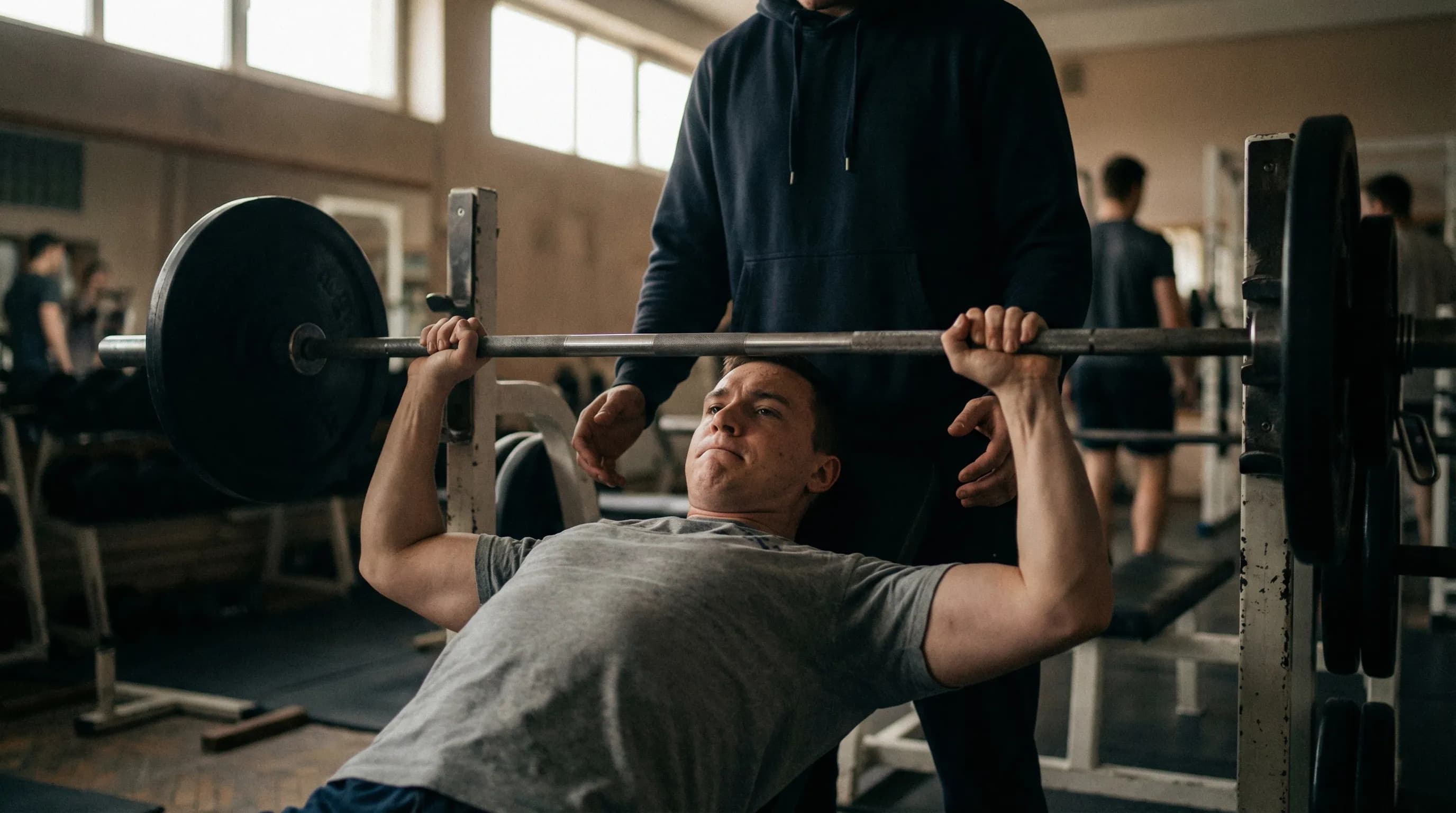
Autoregulated training adjusts workout intensity, volume, and exercise selection based on your body's daily readiness instead of following a rigid, pre-written program. Methods include RPE (Rate of Perceived Exertion) scales, velocity-based training, HRV-guided adjustments, and app-driven readiness scores. A meta-analysis by Mann et al. (2010) found that autoregulated programs produced significantly greater strength gains than fixed-load programs across multiple studies. The core principle is simple: train harder when your body is ready, pull back when it is not, and let objective data guide the decision rather than ignoring recovery signals.
Most training programs are written weeks or months in advance. They prescribe specific weights, sets, and reps for each session without knowing whether you slept well, are fighting off a cold, or just finished a stressful week at work. Fixed programs assume your body recovers on a predictable schedule. It does not.
Autoregulated training solves this by making the program responsive to your actual state. The plan provides structure: which exercises, what movement patterns, how training progresses over time. But the daily execution adapts to how your body is performing right now. This guide covers the major autoregulation methods, the research supporting them, and how to implement autoregulation in your own training, whether manually or with an app like Cora.
What is autoregulated training and why does it work?
Autoregulated training is any training approach that systematically adjusts workout variables based on the athlete's current performance or recovery state. The concept has roots in the Soviet periodization literature of the 1970s, but modern autoregulation was formalized by Mann et al. in a 2010 meta-analysis published in the Journal of Strength and Conditioning Research. Their findings were clear: athletes using autoregulated progressive resistance exercise (APRE) gained significantly more strength than those following linear periodization with fixed loads.
The reason is straightforward. On any given day, your capacity to produce force, tolerate volume, and recover from training stress varies. Factors like sleep quality, psychological stress, nutrition, accumulated training load, and hormonal fluctuations all affect performance. A fixed program cannot account for this variability. It either underloads you on good days (leaving gains on the table) or overloads you on bad days (accumulating unnecessary fatigue and increasing injury risk).
Autoregulation closes this gap by using real-time feedback to match training stress to recovery capacity. The result, supported by research from Zourdos et al. on daily undulating periodization (DUP) and Helms et al. on RPE-based programming, is more efficient progress with lower risk of overtraining.
How do RPE and RIR scales work for autoregulation?
The most widely used autoregulation tool in strength training is the RPE scale, specifically the modified Borg CR-10 scale adapted for resistance training by Helms et al. (2016). This scale rates effort from 1 to 10, where RPE 10 means no more reps could be completed (true muscular failure) and RPE 7 means approximately three reps were left in reserve.
RIR (Reps in Reserve) is the inverse framing of the same concept: RIR 0 equals RPE 10 (failure), RIR 3 equals RPE 7 (three reps left). Many coaches use them interchangeably. Here is how the scale maps out in practice:
- RPE 10 / RIR 0: Maximum effort. No additional reps possible. Reserved for testing or peaking.
- RPE 9 / RIR 1: Could have done one more rep. High intensity, used for heavy working sets.
- RPE 8 / RIR 2: Two reps left. The productive training sweet spot for most hypertrophy and strength work.
- RPE 7 / RIR 3: Three reps left. Moderate intensity, good for volume accumulation and technique work.
- RPE 6 / RIR 4: Warm-up territory for experienced lifters. Light working sets for beginners.
In practice, an autoregulated program might prescribe "Squat: 4 sets of 5 at RPE 8" instead of "Squat: 4 sets of 5 at 80% of 1RM." On a day when you are well-recovered, RPE 8 might correspond to 82% of your 1RM. On a day when you are fatigued, the same RPE 8 might be 75%. The training stimulus remains appropriate for your current capacity either way.
The limitation of RPE is that it requires body awareness that takes time to develop. Research by Helms et al. showed that trained lifters can estimate RIR within approximately one rep on compound lifts, but novice lifters are far less accurate. This is why RPE-based autoregulation works best for intermediate and advanced trainees, and why objective signals (HRV, velocity, readiness scores) are more reliable for beginners.
What are the main autoregulation methods and how do they compare?
Autoregulation is not a single method but a category of approaches. Each uses a different signal to determine how hard you should train. Here is how the major methods compare:
| Method | Signal Used | When It Adjusts | Equipment Needed | Best For |
|---|---|---|---|---|
| RPE / RIR | Subjective effort rating | During each set | None | Intermediate-advanced lifters |
| Velocity-Based (VBT) | Bar speed (m/s) | During each rep | Velocity tracker (e.g., GymAware, PUSH) | Athletes, powerlifters |
| HRV-Guided | Heart rate variability vs. baseline | Before training (morning reading) | Wearable (Apple Watch, Garmin, etc.) | All levels, endurance + strength |
| Readiness Scores | Composite (HRV + sleep + load + RHR) | Before training (daily score) | App + wearable (e.g., Cora) | All levels, especially busy adults |
RPE and velocity-based training adjust within the session itself, making real-time changes to load and volume. HRV-guided training and readiness scores adjust before the session starts, modifying the overall intensity and structure of the workout. The most robust approach combines both: use a pre-session readiness check to set the day's training tier, then use RPE or velocity within the session to fine-tune individual sets.
Why do rigid training programs fail for most people?
Fixed percentage-based programs work under one assumption: that your 1RM stays constant and your recovery is predictable. For professional athletes in controlled training environments, this assumption is roughly valid. For everyone else, it breaks down quickly.
Consider a program prescribing 4x6 at 80% of your squat 1RM every Tuesday. On week one, you slept 8 hours and the weight moves well. On week three, you are traveling, slept 5 hours, and skipped meals. The same absolute load now represents a higher relative intensity for your fatigued body. You grind through the sets, accumulate excessive fatigue, and your recovery for the rest of the week suffers. By week five, you are either overtrained, injured, or dreading the gym.
This is not a discipline problem. It is a programming problem. The program did not account for the variability inherent in your life. Mann et al. found that autoregulated programs outperformed fixed programs specifically because they prevented both underloading and overloading, keeping athletes in the productive training zone more consistently across weeks and months.
The research also shows that rigid programs often lead to premature deloads or missed deloads. A fixed 3-weeks-on, 1-week-deload cycle assumes you need recovery at the same interval every time. Sometimes you need a deload after two weeks. Sometimes you can push productively for five weeks. Autoregulation lets your body's signals determine the timing rather than a calendar.
How does HRV-based autoregulation work for strength training?
Want Cora to help with this?
Try Cora Free Text CoraHeart rate variability provides an objective, pre-session measure of autonomic nervous system readiness. Research by Flatt et al. and others has demonstrated that HRV-guided training modifications lead to equal or superior outcomes compared to fixed plans, with less accumulated fatigue.
For strength training, HRV-based autoregulation typically follows this framework: compare your morning HRV to your personal rolling baseline. If HRV is at or above baseline, proceed with the planned session at full intensity. If HRV is moderately suppressed, reduce intensity by 5-10% or cut volume by one to two sets per exercise. If HRV has been significantly suppressed for two or more consecutive days, swap the session for lighter technique work or active recovery.
The advantage of HRV over RPE for pre-session decisions is objectivity. HRV detects accumulated stress before you feel it subjectively. You might walk into the gym feeling fine after three hard sessions, but your HRV tells a different story. By the time you notice the fatigue in your performance, the damage (excess fatigue, increased injury risk) has already been done.
Green, yellow, and red HRV day protocols
A practical way to operationalize HRV-guided training is to use a traffic-light system based on your morning HRV relative to your 7–14 day rolling baseline. Here is how each day type should influence your training:
| Day Type | HRV Signal | Training Adjustment | Examples |
|---|---|---|---|
| Green | At or above baseline | Full session at planned intensity. Push RPE targets, explore personal records. | Heavy compound lifts, interval runs, threshold work |
| Yellow | 5–10% below baseline (single day) | Reduce load 5–10% or cut 1–2 sets per exercise. Maintain movement quality. | Moderate weights, Zone 2 cardio, technique-focused work |
| Red | 10%+ below baseline or 2+ consecutive low days | Swap session for active recovery or light mobility. Do not force high-intensity work. | Walking, yoga, light swimming, foam rolling |
Thresholds are guidelines. Your personal sensitivity may differ — track adjustments over time to calibrate. See the full HRV-guided training protocol for a detailed implementation guide.
One important caveat: a single yellow or red day does not automatically mean skip your workout. Context matters. A yellow HRV reading on a planned deload day is a non-event. A red reading on a competition day should prompt extra warm-up and conservative early sets, not withdrawal. Use the traffic-light framework as a starting point, not a rigid rule. Over time, pattern recognition in your own data will sharpen the signal considerably. The HRV hub has additional context on interpreting your readings in relation to training phase and life stress.
How do recovery scores and Body Charge autoregulate training?
HRV is one signal. Body Charge, the recovery metric used by Cora, synthesizes multiple signals into a single readiness score: HRV trends, resting heart rate, sleep duration and quality, and recent training load. This composite approach is more robust than any single metric because each signal has blind spots that others compensate for.
For example, HRV can be suppressed by non-training stressors (work stress, travel) without meaning your muscles are not recovered. Training load metrics can show low fatigue even if your sleep has been poor for days. By combining these inputs, a readiness score provides a more accurate picture of your true capacity to train hard on any given day.
Cora uses your Body Charge score to adjust three workout variables automatically:
- Intensity: When Body Charge is low, recommended working weights decrease to match your reduced capacity. When it is high, the app suggests pushing intensity closer to your limits.
- Volume: Total sets per session scale with readiness. A high-recovery day might include additional working sets. A low-recovery day cuts volume to maintain quality without accumulating excessive fatigue.
- Exercise selection: On days with significantly reduced readiness, Cora may suggest swapping a heavy barbell movement for a less fatiguing machine or dumbbell variation that trains the same muscle group with less systemic stress.
This is the same decision-making process an experienced coach would use, automated through data. The recovery calculator can give you a preview of how these adjustments work.
How do you implement autoregulation in practice?
Whether you autoregulate manually or with an app, the practical framework has three layers: pre-session assessment, intra-session adjustment, and post-session tracking.
Pre-session: Assess readiness. Check your recovery status before deciding how to train. This can be a readiness score from an app like Cora, your morning HRV reading, or a simple subjective checklist (sleep quality, energy level, motivation, muscle soreness on a 1-5 scale). Based on this assessment, categorize the day as high, moderate, or low readiness, and adjust the planned session accordingly.
Intra-session: Adjust load and volume using RPE. During the workout, rate each working set using RPE. If your program calls for sets at RPE 8 but the weight is moving at RPE 9, reduce the load by 2.5-5%. If performance drops noticeably mid-session (RPE creeps up with the same weight, bar speed slows), consider cutting the remaining sets rather than grinding through low-quality work. Conversely, if the prescribed weight feels easier than expected (RPE 7 instead of 8), increase the load slightly.
Post-session: Track and review. Log your actual performance (weight, reps, RPE per set) alongside your pre-session readiness assessment. Over weeks, patterns emerge. You might notice that your squat performance is more sensitive to poor sleep than your bench press, or that you consistently overperform after rest days. This data refines your autoregulation decisions over time, making the system more accurate as you accumulate training history.
Can an app autoregulate training for you?
Want Cora to help with this?
Try Cora Free Text CoraYes, and for most people, app-based autoregulation is more effective than manual self-regulation. The reason is simple: apps do not have ego. They do not push through fatigue because they feel guilty about an easy day. They do not skip deloads because the weight still feels "fine." They follow the data.
Cora autoregulates your training automatically. It reads your recovery data from Apple Health (HRV, resting heart rate, sleep, workout history), calculates your Body Charge score, and adjusts today's workout intensity, volume, and exercise selection so you always train at the right level. The AI coaching layer adds contextual awareness: it knows your training history, your progression trends, and your goals, and factors all of this into its recommendations.
This is particularly valuable for three groups: beginners who lack the body awareness for accurate RPE (the app provides the judgment they have not yet developed), busy adults whose recovery varies unpredictably (the app adapts to their chaotic schedules), and competitive athletes who tend to overtrain (the app provides an objective check on their bias toward pushing harder).
What are the most common autoregulation mistakes?
Autoregulation is powerful but easy to misapply. These are the errors that undermine its effectiveness:
- Using RPE to justify easy sessions. Autoregulation means adjusting to your true capacity, not rationalizing low effort. If every session is RPE 6 because you are "listening to your body," you are not autoregulating. You are undertraining. Honest RPE assessment requires discipline.
- Ignoring the program structure. Autoregulation modifies a plan. It does not replace one. You still need structured exercise selection, progressive overload targets, and periodized volume. Autoregulation adjusts the daily execution, not the weekly or monthly architecture.
- Chasing daily readiness at the expense of progression. Some lifters become so focused on matching load to daily HRV that they never push beyond comfortable weights. Progressive overload still drives adaptation. Autoregulation determines when to push and when to hold, not whether to push at all.
- Reacting to single-day HRV dips. One low HRV reading is noise, not signal. Act on multi-day trends or readings significantly outside your normal range. A single bad night of sleep does not warrant skipping a planned heavy session.
- Not tracking the adjustments. If you reduce weight or volume based on readiness but do not log what you did and why, you lose the feedback loop that makes autoregulation improve over time. Track every adjustment so you can identify patterns in your response to training load.
Key Takeaways
- Autoregulated training adjusts workout intensity, volume, and exercise selection based on daily readiness, producing better results than rigid programs (Mann et al., 2010).
- RPE/RIR scales are the most common manual autoregulation method but require training experience to use accurately (Helms et al., 2016).
- HRV-guided adjustments detect accumulated fatigue before you feel it subjectively, making them valuable for preventing overtraining.
- Composite readiness scores (like Body Charge) are more robust than any single signal because they account for sleep, HRV, resting heart rate, and training load simultaneously.
- The best autoregulation approach combines pre-session readiness assessment with intra-session RPE-based adjustments and post-session tracking.
- App-based autoregulation removes ego from the equation, making it particularly effective for beginners, busy adults, and athletes prone to overtraining.
Cora autoregulates your training automatically — it reads your recovery data and adjusts today's workout intensity, volume, and exercise selection so you always train at the right level. Download Cora to start training with autoregulation built in. For a deeper dive into the HRV-specific implementation, read the HRV-guided training protocol guide. For context on how your readiness fits into a broader recovery system, explore the recovery hub and the training glossary.
Frequently Asked Questions
What is autoregulated training?
Autoregulated training is a method of adjusting workout variables like intensity, volume, and exercise selection based on your body's daily readiness rather than following a fixed program. Instead of lifting the same prescribed weight regardless of how you feel, you use objective signals such as RPE, bar velocity, HRV, or recovery scores to determine how hard to train on any given day. Research by Mann et al. found that autoregulated approaches produce superior strength gains compared to rigid percentage-based programs.
How do you autoregulate a workout?
To autoregulate a workout, you assess your readiness before and during the session and adjust accordingly. Before training, check your recovery status using HRV, a readiness score like Body Charge, or a subjective wellness questionnaire. During training, use RPE or RIR to gauge effort on each set. If your target is RPE 8 but the weight feels like RPE 9, reduce the load by 5-10%. You can also autoregulate volume by cutting sets when performance drops or adding sets on strong days.
Is RPE-based training effective?
Yes. Multiple studies support RPE-based training for strength development. Helms et al. demonstrated that RPE scales provide a reliable method for prescribing and monitoring resistance training intensity in trained lifters. Zourdos et al. found that daily undulating periodization using RPE-based autoregulation produced comparable or superior strength gains to fixed percentage-based programs. RPE is most effective for intermediate and advanced lifters who can rate effort accurately.
Can an app autoregulate my training?
Yes. Apps like Cora autoregulate training by reading recovery data from your wearable (HRV, resting heart rate, sleep quality) and adjusting your workout intensity, volume, and exercise selection automatically. Instead of manually checking RPE or deciding whether to train hard, the app calculates a daily readiness score and modifies the planned session accordingly, removing the guesswork from daily training decisions.
Should beginners use autoregulation?
Beginners can benefit from simplified autoregulation, but they should not rely solely on RPE-based methods. Novice lifters lack the training experience to accurately rate perceived exertion. A better approach for beginners is app-based or HRV-based autoregulation, where objective data from a wearable guides the adjustments rather than subjective feel. Beginners should follow a structured program for exercise selection and progression, using autoregulation only to modulate daily intensity based on recovery status.
Track your workouts with Cora
Cora creates AI-powered workout plans that adapt to your recovery, tracks your progress across every metric, and coaches you in real time.