Recovery Heart Rate: What It Is and Why It Matters

Співзасновник Cora (YC W24). Cornell University, економіка. Живе в Сан-Франциско.
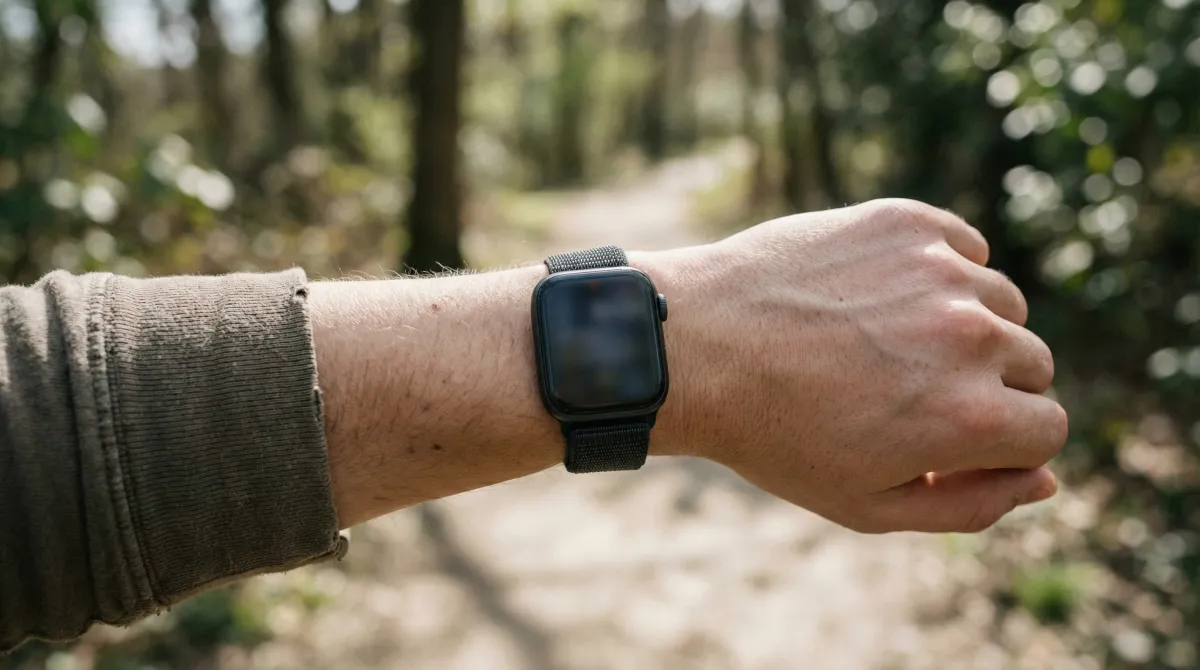
Heart rate recovery (HRR) is the drop in heart rate from peak exercise to a measured point after stopping — typically measured at 1 minute (HRR-1), 2 minutes (HRR-2), and 3 minutes (HRR-3) post-exercise. A landmark 1999 study published in the New England Journal of Medicine found that adults with HRR-1 of 12 bpm or less had 4x higher cardiovascular mortality risk than those with faster recovery. HRR is now recognized as one of the most accessible and clinically meaningful markers of cardiovascular health and autonomic nervous system function that you can measure without a lab.
Your heart rate during exercise is controlled by two competing systems: the sympathetic nervous system (accelerator) and the parasympathetic nervous system (brake). During exercise, sympathetic drive dominates. When you stop, how quickly the parasympathetic system reasserts itself — measured as HRR — tells you how well-trained and healthy your autonomic nervous system is. Fit people have a more responsive vagus nerve; it slams the brakes faster. Sedentary people and those with cardiovascular disease show slower, more gradual deceleration.
The research: why HRR predicts health outcomes
Key Studies
- Cole et al. (1999). "Heart-rate recovery immediately after exercise as a predictor of mortality." NEJM. In 2,428 adults undergoing treadmill stress testing, HRR-1 ≤12 bpm was associated with a 4-fold increase in all-cause mortality over 6 years, independent of exercise capacity and cardiovascular risk factors. PubMed
- Nishime et al. (2000). "Heart rate recovery and treadmill exercise score as predictors of mortality in patients referred for exercise ECG." JAMA. Confirmed HRR as an independent predictor of mortality in a clinical population of 9,454 patients. HRR-1 ≤18 bpm associated with significantly higher risk. PubMed
- Morshedi-Meibodi et al. (2002). "Clinical significance of heart rate recovery after exercise in a population-based study (the Framingham Heart Study)." Circulation. In 1,959 Framingham Heart Study participants, each 10-bpm improvement in HRR-1 was associated with a 13% lower risk of all-cause mortality. PubMed
Heart rate recovery norms by measurement window
| Category | HRR-1 (1 min drop) | HRR-2 (2 min drop) | Clinical Significance |
|---|---|---|---|
| Impaired | ≤12 bpm | ≤22 bpm | 4x increased mortality risk (Cole 1999) |
| Below Average | 13–17 bpm | 23–30 bpm | Mildly impaired parasympathetic function |
| Average | 18–25 bpm | 31–42 bpm | Normal range for most healthy adults |
| Good | 26–30 bpm | 43–52 bpm | Above-average cardiovascular fitness |
| Excellent | >30 bpm | >53 bpm | Elite / highly trained cardiovascular system |
HRR norms by age
Хочеш, щоб Cora допомогла з цим?
Спробуй Cora безкоштовноHRR naturally declines with age due to reduced vagal tone and heart rate chronotropic response. Use these age-adjusted norms as reference points:
| Age Group | Average HRR-1 (general population) | Average HRR-1 (trained athletes) |
|---|---|---|
| 20–29 | 22–28 bpm | 30–45 bpm |
| 30–39 | 20–26 bpm | 28–42 bpm |
| 40–49 | 18–24 bpm | 25–38 bpm |
| 50–59 | 16–22 bpm | 22–34 bpm |
| 60+ | 14–20 bpm | 20–30 bpm |
HRR vs. HRV: two sides of the same coin
| Feature | HRR (Heart Rate Recovery) | HRV (Heart Rate Variability) |
|---|---|---|
| When measured | After exercise | At rest (typically overnight/morning) |
| What it measures | Speed of parasympathetic reactivation | Parasympathetic tone at rest |
| Primary use | Cardiovascular fitness assessment, mortality risk | Daily recovery status, training readiness |
| Improves with | Aerobic training, especially Zone 2 | Aerobic training, sleep, stress reduction |
| Apple Watch measures | Yes (post-workout HR tracking) | Yes (overnight SDNN/RMSSD) |
How to measure HRR with Apple Watch
Хочеш, щоб Cora допомогла з цим?
Спробуй Cora безкоштовноApple Watch tracks your heart rate throughout and after workouts, which makes it straightforward to measure HRR:
- Complete a cardio workout that brings your heart rate to 80–90% of your maximum (a run, bike ride, elliptical session, or intense interval workout).
- Stop completely at the end of your hardest segment. Do not cool down — stand or sit still.
- Note your heart rate immediately when you stop. This is your exercise peak for HRR calculation.
- Check your heart rate exactly 60 seconds later. The difference is your HRR-1.
- Track this over time. A single measurement has limited value; a trend over weeks reveals how your cardiovascular fitness is progressing.
Cora tracks HRR automatically from your Apple Watch workout data and shows you how your recovery speed trends over time. You can also calculate your HRR-1 manually using the heart rate recovery calculator.
How to improve your heart rate recovery
HRR is one of the most responsive cardiovascular metrics to training. Studies show consistent aerobic training improves HRR-1 by 3–8 bpm over 8–12 weeks. Here is what works:
Zone 2 cardio: the primary driver
Zone 2 training (roughly 60–70% of max heart rate, conversational pace) is the most evidence-backed intervention for improving parasympathetic tone and HRR. The mechanism is direct: sustained low-intensity aerobic exercise increases vagal activity and cardiac parasympathetic modulation. Even 150 minutes per week of Zone 2 work produces measurable HRR improvement within 8 weeks. See the complete guide to Zone 2 training on Apple Watch for implementation details.
HIIT: complementary, not primary
High-intensity interval training also improves HRR, primarily through cardiac output adaptations. HIIT and Zone 2 are complementary — elite endurance athletes use both in a polarized distribution (roughly 80% low intensity, 20% high intensity). For improving HRR from a lower baseline, Zone 2 should be the foundation.
Lifestyle factors
Beyond training: adequate sleep (7–9 hours), avoiding alcohol (a direct vagal suppressant), stress management, and smoking cessation all independently improve HRR and autonomic function. These lifestyle factors can suppress HRR even in fit individuals who train consistently.
When to see a doctor about HRR
If you consistently measure HRR-1 at or below 12 bpm — especially combined with any of the following — it is worth discussing with a physician:
- Family history of early cardiovascular disease
- Known hypertension, diabetes, or high cholesterol
- Chest discomfort, dizziness, or unusual breathlessness during exercise
- HRR that has recently declined significantly without a training explanation
HRR is a screening tool, not a diagnostic one. A low HRR alone does not mean you have heart disease — but it is a flag worth investigating in combination with other risk factors.
For related metrics that reflect cardiovascular and recovery health, see the HRV guide and our Zone 2 training guide. Using Apple Watch's training data alongside Cora lets you track HRR trends over months — the most clinically meaningful way to use this metric.
Відстежуй свої показники здоров'я з Cora
Cora створює AI-плани тренувань, що адаптуються до твого відновлення, відстежує прогрес за всіма метриками та тренує тебе в реальному часі.
Спробуй Cora безкоштовно