Protein Intake by Body Weight: How Much Protein Do You Actually Need?

Co-Founder of Cora (YC W24). AI and robotics researcher with 500+ citations from Google Brain and UC Berkeley.
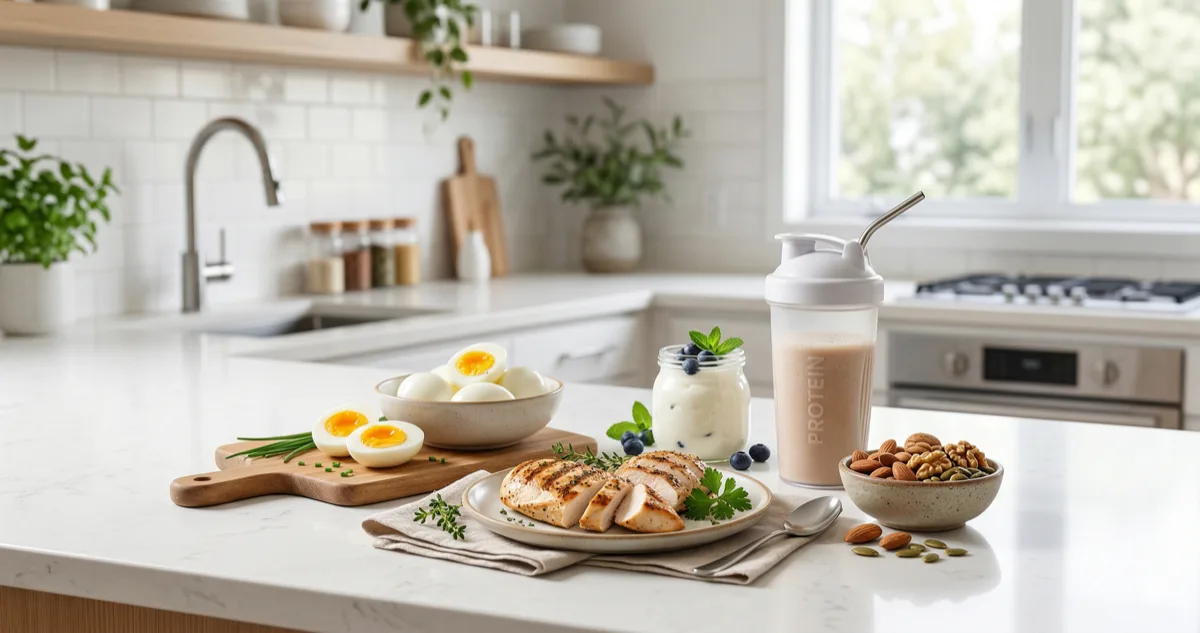
Protein is the most discussed macronutrient in fitness — and also the most misunderstood. The official recommended daily allowance (0.8 g/kg) is frequently cited, but researchers and practitioners broadly agree it represents the minimum to prevent deficiency, not the optimal amount for performance, body composition, and healthy aging.
Here's a complete, evidence-based guide to protein intake by body weight, activity level, and goal.
Why Protein Intake Should Be Based on Body Weight
Protein requirements scale with lean body mass — the amount of muscle, organ, and bone tissue your body needs to maintain and repair. Using body weight (particularly lean body weight) as the denominator for protein targets is more accurate than flat daily gram recommendations, which fail to account for significant differences in body size. [Source]
Protein Targets by Body Weight and Goal
Daily Protein Recommendations (g/kg of body weight)
| Goal / Population | Protein Target | Evidence Level |
|---|---|---|
| Sedentary adults (minimum) | 0.8 g/kg | RDA — prevents deficiency |
| Recreational exercisers | 1.2–1.6 g/kg | Strong |
| Muscle building / strength athletes | 1.6–2.2 g/kg | Very strong (ISSN position) |
| Endurance athletes | 1.4–1.7 g/kg | Strong |
| Adults 50+ (preserving muscle) | 1.6–2.2 g/kg | Strong |
| Caloric deficit / fat loss | 2.0–2.4 g/kg | Strong (prevents muscle loss) |
| Maximum practical benefit | ~2.2 g/kg | Plateau in MPS above this |
Sources: ISSN Position Stand (2017), Morton et al. British Journal of Sports Medicine (2018).
Protein Intake in Grams: A Practical Reference
Daily Protein in Grams by Body Weight (Muscle Building Target: 1.8 g/kg)
| Body Weight | Minimum (0.8 g/kg) | Active (1.4 g/kg) | Building Muscle (1.8 g/kg) |
|---|---|---|---|
| 55 kg / 121 lb | 44 g | 77 g | 99 g |
| 65 kg / 143 lb | 52 g | 91 g | 117 g |
| 75 kg / 165 lb | 60 g | 105 g | 135 g |
| 85 kg / 187 lb | 68 g | 119 g | 153 g |
| 95 kg / 209 lb | 76 g | 133 g | 171 g |
| 110 kg / 242 lb | 88 g | 154 g | 198 g |
Want Cora to help with this?
Try Cora Free Text CoraThe Science Behind Protein Targets
The Morton Meta-Analysis (2018)
The most comprehensive protein dose-response study to date analyzed 49 trials with 1,863 participants and found that protein supplementation significantly increased lean mass gains with resistance training up to a ceiling of approximately 1.62 g/kg/day, beyond which gains plateaued. However, the authors noted that individual variation is significant and some athletes may benefit from higher intakes. [Source]
The ISSN Position Stand
The International Society of Sports Nutrition's position stand recommends 1.4–2.0 g/kg/day for most exercising adults, with higher intakes (2.0–3.0 g/kg/day) potentially beneficial during periods of caloric restriction to preserve lean mass. The ISSN also supports protein intakes as high as 3.1 g/kg/day in resistance-trained athletes in caloric deficit without negative effects. [Source]
Protein for Fat Loss
During a calorie deficit, higher protein intake (2.0–2.4 g/kg/day) serves a dual purpose: it provides the substrate for muscle protein synthesis while simultaneously increasing satiety (protein is the most satiating macronutrient) and diet-induced thermogenesis (protein has a 20–30% thermic effect vs 5–10% for carbohydrates and 0–3% for fat). Multiple studies show that higher protein diets preserve lean mass better during weight loss than lower protein diets at equal calories. [Source]
Best Protein Sources by Leucine Content
Leucine is the key amino acid that triggers muscle protein synthesis. For optimal MPS signaling, each protein-containing meal should deliver approximately 2–3 g of leucine. Here are common foods ranked by leucine content per standard serving:
| Food | Serving | Protein (g) | Leucine (g) |
|---|---|---|---|
| Whey protein isolate | 30 g scoop | 25–27 | ~3.0 |
| Chicken breast | 150 g | ~47 | ~3.7 |
| Canned tuna | 140 g | ~33 | ~2.6 |
| Eggs | 3 large | ~18 | ~1.5 |
| Greek yogurt (plain) | 200 g | ~20 | ~1.7 |
| Beef (90% lean) | 150 g | ~38 | ~3.2 |
| Lentils | 200 g cooked | ~18 | ~1.3 |
Want Cora to help with this?
Try Cora Free Text CoraProtein Distribution: Why Meal Timing Matters
Total daily protein is the most important variable — but how you distribute it across meals makes a meaningful difference. Research shows that muscle protein synthesis is maximized by consuming protein in 3–4 evenly spaced servings of 30–40 g, rather than front-loading or back-loading protein to 1–2 large meals. [Source]
A practical daily template for a 80 kg (176 lb) person targeting 1.8 g/kg (144 g total):
- Breakfast: 4 scrambled eggs + 200g Greek yogurt = ~38 g protein
- Lunch: 150 g chicken breast + legumes/grains = ~52 g protein
- Post-workout snack: Whey shake + milk = ~35 g protein
- Dinner: 130 g salmon + vegetables = ~30 g protein
- Total: ~155 g (1.9 g/kg)
Special Considerations
High Body Fat Percentage
For individuals with high body fat, protein targets should be based on lean body mass (estimated as total weight minus fat mass) rather than total body weight to avoid unrealistically high targets. A 120 kg person at 40% body fat has approximately 72 kg of lean mass — their protein target should be based on ~72 kg, not 120 kg.
Plant-Based Diets
Plant protein sources tend to have lower leucine content and digestibility compared to animal sources. Plant-based athletes should target the upper end of protein recommendations (2.0–2.2 g/kg/day) and prioritize soy protein, pea protein, and combinations of rice + pea protein to approximate complete amino acid profiles. Supplementing with leucine (1–2 g per meal) is an evidence-supported strategy for plant-based athletes. [Source]
Key Takeaways
- The RDA (0.8 g/kg) is a minimum, not an optimal target for active adults
- 1.6–2.2 g/kg/day is the evidence-based range for muscle building and preservation
- Higher protein (2.0–2.4 g/kg) is particularly important during caloric deficits
- Adults 50+ need higher intakes due to anabolic resistance
- Distribute protein across 3–4 meals with 30–40 g per serving for best MPS response
- Leucine content is the key quality metric for evaluating protein sources
Getting your protein intake right is one of the highest-leverage changes you can make for body composition, performance, and healthy aging. Unlike many nutrition interventions, the evidence here is unusually consistent and strong — and the practical implementation (eat more high-quality protein at each meal) is straightforward.
Track your nutrition with Cora
Cora creates AI-powered workout plans that adapt to your recovery, tracks your progress across every metric, and coaches you in real time.